Loading...
Serving Newton, MA and surrounding areas. (617) 634-8563
Serving Newton, MA and surrounding areas. (617) 634-8563
Sticking doors, sloped floors, or growing cracks? A permitted foundation repair stabilizes your home and protects its value in Newton's demanding real estate market.
Foundation raising in Newton, MA involves driving steel piers or injecting stabilizing material deep beneath a settled foundation, then using hydraulic equipment to bring the structure back toward its original position, most residential projects take one to three days of active work once the required permit is approved by Newton's Inspectional Services Department.
If you have noticed sticking doors, diagonal cracks at window corners, or floors that slope more than they used to, the foundation beneath that area has likely moved. Foundation raising addresses the cause, not just the symptom. A patch on a wall crack does nothing if the ground is still shifting beneath the slab.
Foundation raising is a structural repair, and for homes with more severe deterioration it is often paired with foundation installation or replacement. The assessment visit will clarify which approach fits your situation before any work is recommended.
If a door or window that used to work fine now sticks, drags, or will not latch, the frame around it may have shifted because the foundation beneath it has moved. In Newton, this symptom often appears in late winter or early spring after repeated freeze-thaw cycles have pushed the soil. Catching it early is far less costly than waiting until the movement has spread.
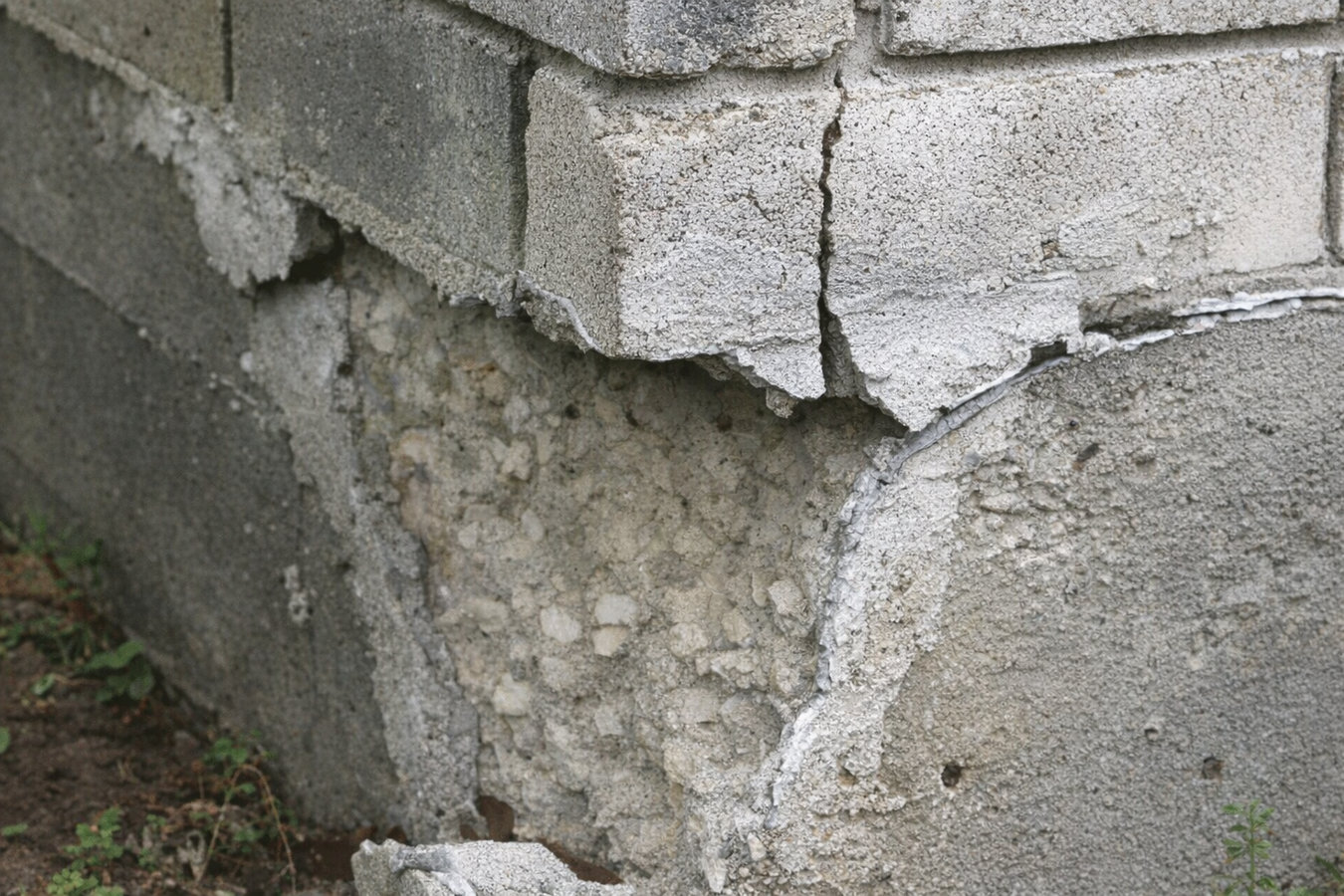
Stair-step cracks in brick or diagonal cracks running from the corners of door and window frames are a reliable sign of foundation settlement. Hairline cracks in older Newton plaster are normal, but cracks wider than a quarter inch, cracks that are actively growing, or horizontal cracks in basement walls deserve a professional evaluation right away.
A noticeable slope that has gotten worse over time is worth investigating even in Newton's older Colonial and Victorian homes, where some unevenness is expected. A contractor can measure the actual elevation difference and tell you whether the movement is within a normal range or signals active foundation settlement that requires stabilization.
If water consistently collects against the foundation wall or your basement floor is damp after heavy rain, the soil around the foundation may be saturated and shifting. Newton receives significant precipitation through the spring snowmelt season, and persistent moisture is one of the leading causes of foundation movement in this region. Addressing drainage and settlement together produces better long-term results.
Vetra Newton Concrete handles foundation raising for residential properties throughout Newton. Every project begins with a free on-site assessment: we walk the foundation perimeter, inspect the basement or crawl space, take measurements, and identify the pattern and location of any cracking or movement. You receive a written diagnosis and recommendation before any work is discussed, and we apply for the required Newton building permit on your behalf once you decide to move forward.
Steel push pier installation is the approach we use for heavier structural foundations. Piers are driven through the upper soil layers, past Newton's active freeze-thaw zone, and into stable bearing material far below the surface. Once the piers are in place, hydraulic equipment lifts the foundation back toward its original elevation. The system is designed to hold permanently at that depth, which means seasonal ground movement no longer affects the supported section.
For concrete slabs, garage floors, and stoops that have settled but do not require full pier work, polyurethane foam injection can fill voids beneath the slab and restore a level surface in a fraction of the time. We assess which method is appropriate for each situation; we do not recommend one over the other based on cost alone. Homes that have reached the point where raising is no longer enough are referred directly to our foundation installation service, where a full replacement is designed from the ground up. New construction and additions are handled through concrete footings poured below the frost line to prevent the settlement problem from occurring at all.
Best suited for heavier structural foundations where piers must reach stable soil well below Newton's frost line.
Efficient solution for settled concrete slabs, garage floors, and stoops where void filling and leveling is the primary goal.
Ideal for homeowners who want a written evaluation and clear recommendation before committing to any repair method.
We handle the Newton building permit application and coordinate the city inspection on every structural project.
A large share of Newton's homes were built between the 1880s and the 1950s, many on rubble stone or brick foundations that were never designed to handle modern drainage patterns or the repeated stress of Newton's freeze-thaw winters. The ground here freezes and thaws multiple times each season, and that repeated movement adds up over decades. If your home is more than 60 years old and you have not had the foundation evaluated, it is worth a conversation.
Much of eastern Massachusetts, including Newton, sits on glacial till, a mix of clay, sand, gravel, and boulders deposited by retreating glaciers. This soil is notoriously inconsistent: very stable in one spot and highly compressible just a few feet away. Contractors working here regularly need to drive piers deeper than they would in areas with more uniform ground conditions, which affects both the time and cost of the project. Local experience with these soil patterns matters.
Newton also ranks among the most expensive residential real estate markets in Massachusetts. A foundation problem that is not fully resolved, or that was repaired without permits, can surface during a buyer's inspection and complicate a future sale. Homeowners in Brookline and Cambridge face similar conditions, and we bring the same permitted, documented approach to every community we serve.
Describe what you have noticed: sticking doors, visible cracks, uneven floors. We respond within 1 business day. No price is quoted over the phone; every foundation project requires an on-site visit before any number is discussed.
We walk the foundation, take measurements, identify the pattern and location of movement, and provide a written diagnosis and cost estimate. The estimate explains what we found and why we recommend the specific repair, not just a total price.
Once you approve the estimate, we file the required Newton building permit on your behalf. Permit approval typically takes one to three weeks. Work cannot legally begin until the permit is in hand, so this step is built into the timeline.
The crew installs piers or injects foam as specified, carefully monitoring the lift. Newton's building inspector visits after completion to sign off. You receive documentation of the finished work, which is important for your records and any future sale.
We respond within 1 business day. The estimate and on-site assessment are completely free and there is no obligation to move forward. Someone from our office will call to schedule the visit and walk you through what to expect.
(617) 634-8563Structural foundation work in Massachusetts requires a Construction Supervisor License. We carry one and it is verifiable through the state's Office of Consumer Affairs and Business Regulation. This is not a formality — it confirms legal authorization to oversee the structural work your home depends on.
We are based in Newton and work across all 13 of the city's villages. Newton's glacial till soil, its permit office, and its pre-war housing stock are things we deal with every week. That local knowledge affects every step, from how deep we drive piers to how we coordinate the inspection timeline.
Newton's Inspectional Services Department requires a building permit for structural foundation work, and the city enforces it. We handle the application on every project. A repair done without a permit can flag in a home inspection and complicate a sale in Newton's competitive market.
You receive a written assessment explaining what we found and why a specific repair is warranted before any price is agreed to. We do not recommend repairs we cannot clearly justify, and we do not start work you have not specifically approved in writing.
The National Foundation Repair Association sets industry standards for underpinning and pier installation methods. A contractor who cannot explain how their method aligns with those standards, or who avoids the permit process, is a contractor worth skipping in a market like Newton where documentation of every repair matters.
When raising alone is not enough, a full foundation replacement addresses severe deterioration, horizontal cracking, or structural failure that lifting cannot resolve.
Learn moreProperly poured concrete footings below the frost line give new additions and structures the stable base that prevents future settlement in Newton's freeze-thaw climate.
Learn moreSpring is the busiest season for foundation work in Newton — schedule your assessment now to get on the calendar before spots fill.