Loading...
Serving Newton, MA and surrounding areas. (617) 634-8563
Serving Newton, MA and surrounding areas. (617) 634-8563
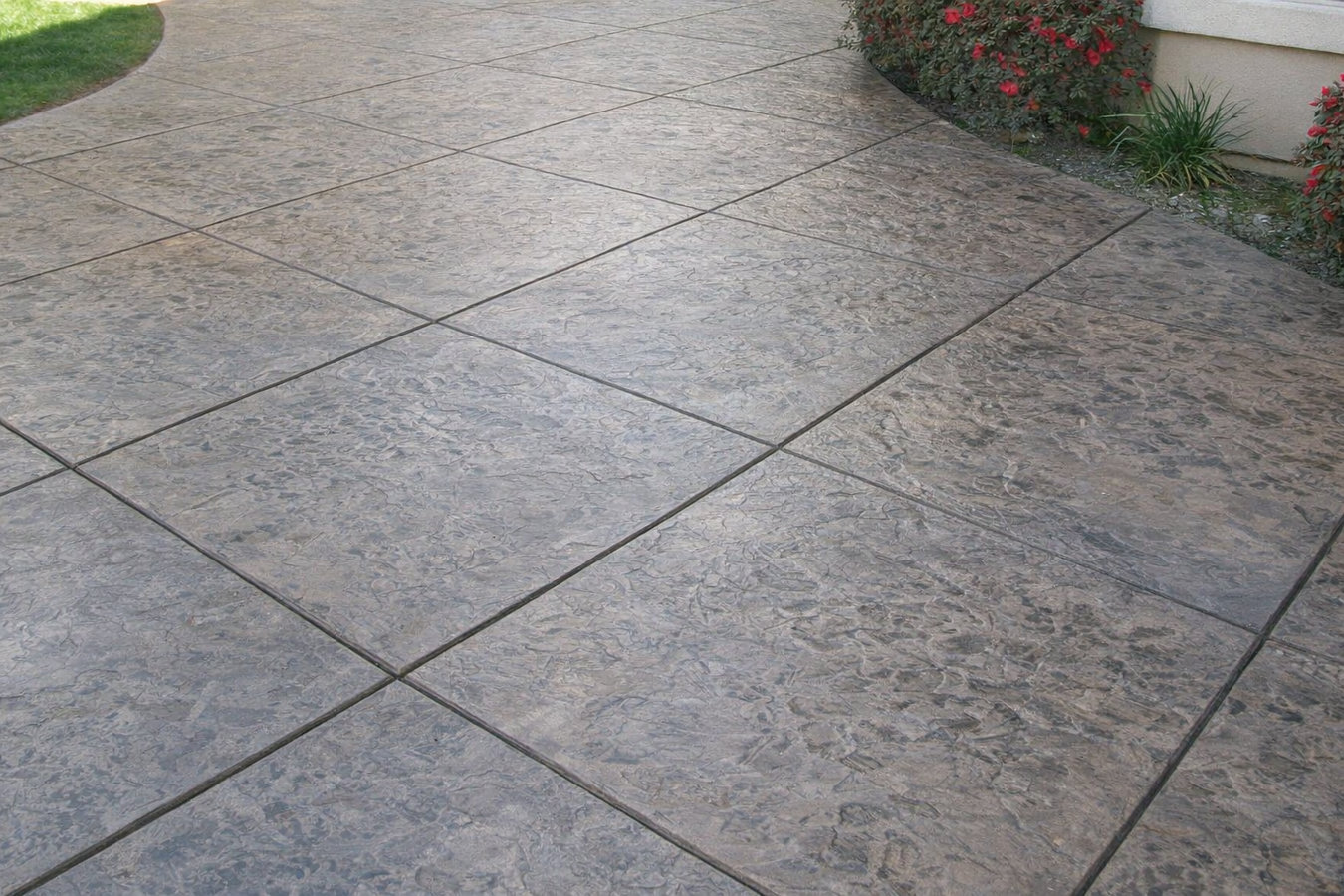
Cracked or faded concrete surfaces drag down your home's curb appeal. Stamped concrete gives you the look of brick or stone at a lower installed cost, using mixes and sealers designed to survive Newton winters.
Stamped concrete in Newton is poured, pressed with textured molds, and sealed to handle freeze-thaw exposure — most residential patios and driveways are completed in one to three days, with full use restored after a week. It is a solid slab that mimics the appearance of brick, slate, or flagstone at a lower installed cost than natural materials.
Newton homeowners turn to stamped concrete when they want to upgrade an aging driveway or build a patio that looks like it belongs with the older, character-rich homes in neighborhoods like Chestnut Hill or Newton Centre. If you are also considering finishes beyond stamping, our decorative concrete service covers options like exposed aggregate and polished surfaces.
Cracks wider than a pencil, or sections of concrete that have lifted unevenly, signal the slab has reached the end of its useful life. In Newton, decades of freeze-thaw cycles accelerate this wear. Patching rarely holds for more than a season.
Stamped concrete that looks flat and chalky has lost its sealer. Run your hand across it — if it feels rough and powdery, or water no longer beads on the surface, the sealer has worn through. If the surface underneath is also spalling, replacement is the better investment.
Puddles sitting on your driveway or patio for hours after rain mean the surface has settled unevenly or was never graded correctly. Standing water accelerates concrete deterioration and can direct water toward your foundation.
Newton's real estate market is competitive. If your front walkway looks tired compared to neighboring homes, stamped concrete is one of the most cost-effective ways to improve how your property reads from the street.
Our stamped concrete work covers residential patios, driveways, walkways, and decorative aprons. Each project starts with base preparation — proper gravel depth, compaction, and grading — because the surface is only as good as what is underneath it. In Newton, where clay-heavy soil expands and contracts with each freeze, that base work is not optional.
Pattern selection includes cobblestone, herringbone brick, large slate tiles, flagstone, and wood plank designs. Color is added either by mixing pigment directly into the wet concrete or by applying a dry color hardener before concrete stamping. A tinted sealer is applied after curing to deepen the color and protect the surface from road salt and moisture intrusion — both constants in Newton winters.
For homeowners who want design variety across an outdoor living space, we combine stamped concrete with our concrete patio construction work to tie together patios, walkways, and transitions from the home's exterior. Every project includes a permit application to Newton's Inspectional Services Department where required, plus a walkthrough at completion.
Ideal for homeowners adding or replacing a backyard living area.
Suits properties where curb appeal and durability both matter.
Works well for homes where the front approach sets the first impression.
For existing stamped surfaces that have faded but are structurally sound.
Newton sits in USDA Hardiness Zone 6b and experiences dozens of freeze-thaw cycles every winter, where temperatures swing above and below freezing repeatedly from November through March. Water seeps into surface pores, freezes, expands, and chips the concrete — a process called spalling — if the mix and sealer were not chosen for this climate. This is why the sealer specification matters as much as the pattern choice.
Road salt applied to Newton streets migrates onto private driveways and walkways by tires and foot traffic. A sealer rated for salt resistance is not a premium add-on here; it is standard practice for any concrete surface in this area. Rinsing surfaces after major storms extends the sealer's life between applications.
Newton's older housing stock — much of it built between the 1920s and 1960s — means many projects involve removing original concrete before the new work begins. That demolition adds cost but it is the correct foundation for work meant to last. We handle this removal for homeowners across Brookline, Waltham, and throughout Newton's 13 villages.
We respond within 1 business day to schedule an in-person site visit. No firm price is given without seeing the job — site conditions vary too much for a phone quote.
We measure the area, check drainage, assess any existing concrete, and identify permit requirements. You receive a written estimate breaking down every cost before any commitment.
We handle the permit application with Newton's Inspectional Services Department where required. Permit processing typically adds one to two weeks, which we factor into the project schedule.
The crew handles demolition, base prep, the pour, and stamping in sequence. Sealer is applied after curing, usually within the first week. We walk the finished surface with you before calling the job complete.
We respond within 1 business day. There is no obligation to proceed after the estimate — we provide a written breakdown of every cost so you can make an informed decision. After you submit, someone from our office will call to schedule a free on-site visit.
(617) 634-8563We work across Newton, Waltham, Brookline, Cambridge, and 9 other communities in the region. That breadth means we have seen the range of soil conditions, permit requirements, and housing ages that affect how concrete work is done in this area.
Demolition, base prep, the pour, pattern and color, sealer, and cleanup are listed separately on every estimate. You will know exactly what the number includes before you sign anything.
We use sealers specifically selected for New England winters and road salt exposure, not generic products. This is one of the most consequential decisions in a stamped concrete project, and it is one most homeowners never know to ask about.
We handle the permit process with Newton's Inspectional Services Department on every project that requires it. Permitted work is on record, inspected, and protects your investment if you sell or refinance. The American Concrete Institute publishes the standards we follow for residential flatwork.
Every stamped concrete project we complete is built on prepared base work that we document and walk through with you before the pour. You can see what is underneath before it disappears under concrete — because that is the part that determines whether the surface lasts 5 years or 25.
Explore finishes beyond stamping, including exposed aggregate and polished surfaces for patios and walkways.
Learn moreBuild a new patio from the ground up with the right grade, base, and thickness for Newton's climate.
Learn moreSpots book quickly in spring and summer — contact us now to lock in your project date.