Loading...
Serving Newton, MA and surrounding areas. (617) 634-8563
Serving Newton, MA and surrounding areas. (617) 634-8563
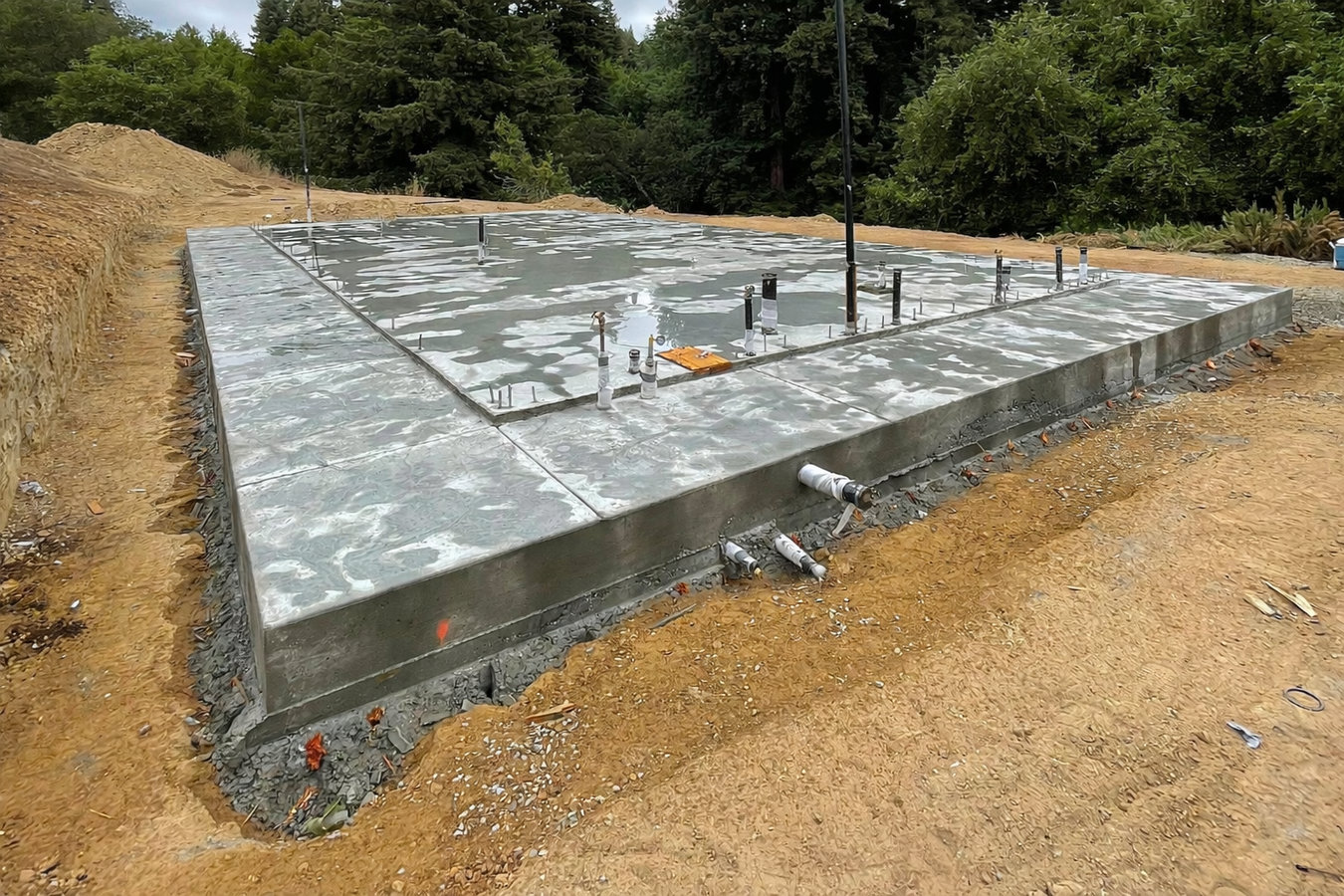
Adding a garage or ground-floor addition? A properly built slab with frost-depth footings and a compacted sub-base gives you a foundation that stays flat through every New England winter.
Slab foundation building in Newton, MA covers everything from excavation and sub-base preparation through forming, reinforcement, and the finished pour — most residential projects span one to two weeks on-site, plus permit review time through Newton's Inspectional Services Department.
If you are planning a detached garage, sunroom, or ground-floor addition, a slab is often the most cost-effective foundation choice. You get a solid, level base without the extra excavation a basement requires. In Newton, the critical variable is what happens before the concrete is poured: clay-heavy soil needs to be removed and replaced with compacted gravel, and the edge footings need to go deep enough to sit below the frost line.
For projects that require a deeper foundation type, foundation installation covers full basement and crawl-space foundations. Both services follow the same permitting process through the city.
If you want to add a detached garage, sunroom, or first-floor addition on relatively flat ground, a slab is usually the right starting point. You do not need a crawl space or basement under a single-story structure. A properly built slab gives you a level, permitted base without the excavation cost a deeper foundation would require.
A slab that slopes noticeably, has cracks wider than a hairline, or shows diagonal cracking at corners has likely settled on an improperly prepared base. In Newton, clay soil shifting with seasonal moisture is the most common cause. Patching will not fix a slab that has moved; a replacement poured on a properly compacted gravel base is the durable solution.
When a slab shifts, the structure on top of it shifts too. If garage doors or ground-floor windows have started to bind or leave gaps they did not have before, the foundation below them may have settled. Getting a contractor to look at the slab before the movement progresses further can prevent a much larger repair bill.
If water collects on a garage slab or seeps in at the edges after a heavy rain, the original slab was either not sloped correctly or was poured without adequate drainage preparation underneath. Newton gets significant rainfall, and clay soil does not drain quickly. Left untreated, that moisture will continue to work against the concrete and anything stored on it.
Vetra Newton Concrete handles slab foundation projects from the first site visit through the final inspection. Every project includes a written estimate, permit application and coordination with Newton's Inspectional Services Department, excavation, sub-base preparation, forming, reinforcement, and the finished pour.
Sub-base work is where we are most particular. Newton's glacially deposited soil contains significant clay, and that soil needs to be removed from the footprint and replaced with compacted gravel before we set any forms. The thickened edge footings, which carry the weight of whatever is built on top, are designed to sit below the frost line, typically four feet in Newton. This step is what separates a slab that stays flat from one that heaves after the first hard winter.
Reinforcement is standard on every slab we pour: either welded wire mesh or rebar in a grid, depending on what the slab will carry. A plastic vapor barrier goes down before the pour to block moisture from wicking up through the concrete. Once the slab is poured and finished, we apply a curing compound to slow the drying process and help the concrete reach its full strength. For projects that need a deeper foundation type, we also offer concrete footings as a separate service for isolated columns or perimeter support.
For detached and attached garages requiring frost-depth footings and a vehicle-rated slab thickness.
Ground-floor additions that attach to an existing structure and need a level, permitted base.
Workshops, sheds, and detached outbuildings where a permitted slab is required by Newton building code.
Removal and full replacement of settled or cracked existing slabs with correct sub-base preparation.
Newton sits in a cold-humid climate zone where the ground freezes every winter, sometimes to a depth of three or four feet. Massachusetts building code requires slab edge footings to extend below that frost line, which means slabs here need deeper, more substantial footings than you would see in warmer states. Any contractor quoting a slab foundation in Newton without addressing frost depth is skipping the most important part of the job.
The city's soil adds another layer of complexity. Much of Newton sits on glacially deposited material that contains significant clay and silt. Clay soil expands when wet and shrinks when dry, putting constant pressure on anything sitting on top of it. In villages like Newton Centre and Brookline, where mature lots are fully developed and tree roots are often close to work areas, careful access planning before pour day is essential. Newton's tight lot conditions also affect how concrete trucks can reach a rear yard or side addition, and we assess this during the estimate visit.
Newton's Inspectional Services Department requires a pre-pour inspection before any concrete is placed. We schedule this proactively so it does not delay your project. The short working season, roughly April through October for safe pours, creates real scheduling pressure. If you are planning a spring project, the time to reach out is late winter, before the best crews are fully booked. Homeowners in Waltham face the same seasonal constraints and permit requirements, and we serve that area as well.
Reach out by phone or through our contact form. We respond within 1 business day. Every slab project requires a site visit before we quote — soil conditions, access, and lot constraints all affect the price significantly.
We walk the site, assess soil, access routes for the concrete truck, and confirm the footing depths needed to meet Newton's frost-depth requirement. You get a written, itemized estimate — no verbal ballparks.
We apply for the building permit through Newton's Inspectional Services Department and schedule the required pre-pour inspection. This typically adds one to two weeks before work can legally begin, and we manage the timeline so you are not caught waiting.
We excavate, remove clay-heavy soil, compact gravel, set forms, place reinforcement, and pour. After the pour, we apply a curing compound and walk you through the cure timeline: walk on it after 24 hours, light vehicle use after one week, full strength at 28 days.
We visit your property, assess your soil and access conditions, and give you a written estimate at no charge. Spring slots fill fast in Newton — call or submit a form today.
(617) 634-8563Massachusetts building standards require edge footings to extend below the frost line, and Newton's depth is among the most demanding in the region. We design and pour every slab with footings that meet this requirement, so the freeze-thaw cycle that damages shortcuts does not touch yours.
We do not pour on unprepared ground. On every Newton slab project, we excavate the clay-heavy soil from the footprint and replace it with compacted gravel before setting forms. This is the step most often cut by contractors looking to lower a bid, and it is the step most responsible for long-term slab performance.
We have submitted permit applications through Newton's Inspectional Services Department on slab and foundation projects since we opened in 2022. We know the required documentation, the inspection schedule, and how to keep projects moving without delays. You never have to make a call to the city.
Concrete trucks are large and heavy, and Newton's tight lots can make rear-yard access genuinely difficult. The American Concrete Institute recognizes site logistics as a key factor in slab quality. We assess access routes during the estimate visit so pour day goes exactly as planned.
These four points connect directly to the most common ways slab foundations fail in Newton: inadequate footing depth, poor sub-base preparation, permit complications, and logistics problems on pour day. Addressing all four upfront is what produces a foundation you will not have to think about again.
When a project calls for a full basement or a deeper foundation type, our foundation installation service covers excavation, forming, waterproofing, and all required inspections.
Learn moreIsolated column footings and perimeter footings for additions, garages, and outbuildings built to Newton's frost-depth requirements.
Learn moreSpring construction slots fill fast in Newton — reach out now to lock in your project date before the season gets away from you.