Loading...
Serving Newton, MA and surrounding areas. (617) 634-8563
Serving Newton, MA and surrounding areas. (617) 634-8563
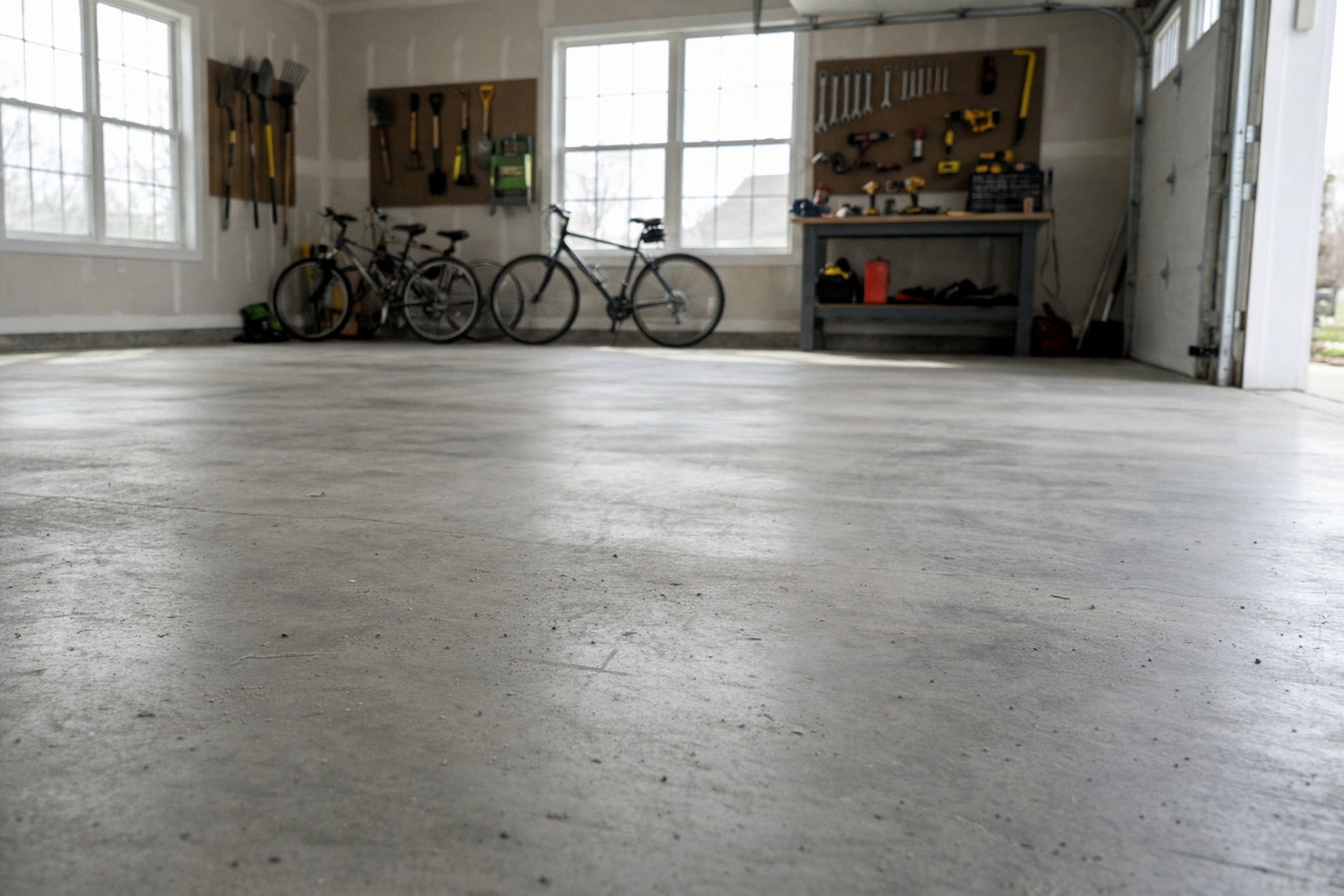
Flaking, cracking, or draining wrong? A properly poured garage floor fixes the problem and holds up through Newton winters without constant patching.
Garage floor concrete in Newton, MA means removing the old slab, compacting the subbase, installing a vapor barrier, and pouring fresh concrete at four to six inches thick — most residential jobs take one to two days of active work, with a seven-day wait before you can park on it again.
Newton homeowners with garages built before 1970 are often dealing with slabs that were poured thinner than modern standards, never reinforced, and never sealed. Once freeze-thaw damage and road salt exposure catch up to an aging slab, patching buys very little time. The concrete is breaking down from the inside, and a surface repair does not fix that.
Garage floor work often pairs naturally with concrete floor installation for adjacent basement or utility spaces. Combining projects in one mobilization typically reduces total cost.
Small chips and craters near the garage door — where snow and slush collect — mean the concrete is breaking down from repeated freeze-thaw cycles and road salt exposure. Once surface spalling starts, it accelerates. Individual patches rarely hold more than one or two winters.
A crack running diagonally across the middle of your floor, or one where one side sits higher than the other, means the slab is moving. In Newton's older neighborhoods, shifting glacial till soil and nearby tree roots are common causes. If you can fit a quarter into the crack, the slab needs a full assessment.
Standing water near the back wall or in the middle of the floor means the slab was never graded correctly, or it has settled unevenly over time. That pooled water freezes in winter and accelerates concrete deterioration. A new pour corrects the slope so water drains toward the door.
That chalky white film — called efflorescence — means moisture is moving up through the slab and depositing minerals on the surface. It is a sign that there is no vapor barrier under your floor and that ground moisture is actively working against your concrete. It shortens the slab's remaining useful life.
Vetra Newton Concrete handles full garage floor replacements for residential properties across Newton. That means we break out and haul the old slab, assess and compact the subbase, install a polyethylene vapor barrier, and pour fresh concrete at the correct thickness for your use case. For a standard passenger-car garage, four inches is the baseline. If you store heavy equipment or park a truck regularly, we pour five to six inches in the high-load zone.
Every pour is reinforced with welded wire mesh to keep the slab together if a crack ever forms. Control joints are cut at regular intervals so the concrete has a planned place to relieve shrinkage stress, which prevents random cracking across the open floor. The default finish is a broom texture, which gives you grip on a wet surface without collecting dirt in the grooves. We also apply a penetrating sealer at the end of the project, which is especially important in Newton given the combination of road salt and freeze-thaw winters.
For clients who need concrete work beyond the garage, we offer concrete floor installation for basements and utility rooms, and slab foundation building for additions and accessory structures. Both services follow the same preparation standards as garage floor work.
Best for floors with widespread cracking, settling, or surface deterioration that cannot be corrected by a surface repair.
For floors in structurally sound condition with surface-only damage, a bonded overlay can extend the useful life at lower cost.
Critical for Newton garages that show efflorescence or dampness, where ground moisture is actively wicking through the slab.
Applied to all new pours as standard; also available as a standalone service for existing floors to protect against salt and freeze-thaw damage.
Newton experiences roughly 100 freeze-thaw cycles per year, running from late November through March. Each cycle pushes water into any crack or pore, freezes it, expands the concrete from the inside, and leaves the surface a little weaker than it was. That process accelerates on garage floors that were poured before modern mix and sealing standards, which describes a large share of Newton's housing stock.
Road salt compounds the problem. Newton Public Works applies deicing chemicals to city streets throughout the winter, and that salt gets carried into your garage on every vehicle every day from December through March. Salt draws moisture into the concrete surface and catalyzes the same freeze-thaw damage at an accelerated rate. Homes in villages like Newton Centre and Waltham face the same conditions, and we work throughout both areas.
Newton also requires a building permit for full slab replacement. We handle that process with the city's Inspectional Services Department on your behalf, including any required inspections. Clients in nearby Brookline face similar permit requirements, and we manage the process there as well.
The City of Newton Inspectional Services Department publishes the permit requirements for structural concrete work. The Portland Cement Association provides guidance on concrete mix design for freeze-thaw environments.
Call or submit a form. We respond within 1 business day. Tell us the garage size, what you are seeing, and whether you want a full replacement or an assessment. No price is given over the phone — every project needs a site visit.
We visit your property, assess the condition of the existing slab and the soil underneath it, and give you a written estimate that itemizes demo, materials, vapor barrier, labor, and sealer separately. You will know exactly what the number covers.
We apply for the required Newton building permit on your behalf. This typically adds one to two weeks before work can begin. Once approved, you get a confirmed start date and a clear timeline for when your garage will be back in use.
The crew breaks out the old slab, hauls debris, prepares the subbase, and completes the pour in one continuous session. You can walk on it within 24 hours and park on it after seven days. We do a final walkthrough before leaving the site.
Free on-site estimate. Written, itemized quote. We handle the Newton building permit from start to finish.
(617) 634-8563Newton requires a building permit for slab replacement, and we handle the entire process with the city's Inspectional Services Department. Permitted work is inspected, on record, and protects your investment if you sell or refinance.
We specify a concrete mix and penetrating sealer designed for New England freeze-thaw conditions, not a generic product. The sealer is included as a standard part of every garage floor project, not an upsell.
We work across Newton, Waltham, Brookline, Cambridge, and 9 other communities in the region. That range means we have seen the variety of soil conditions, older housing stock, and permit requirements that affect how concrete work is done in this area.
Demo, haul-away, subbase prep, vapor barrier, materials, labor, sealer, and cleanup are listed separately on every estimate. The Massachusetts HIC Registration program requires this transparency for registered contractors — and we hold that registration.
Every one of these factors connects directly to the specific challenges of doing concrete work in Newton — the permits, the winters, the aging housing stock. We have worked in this city since 2022 and the process is straightforward because we have done it correctly from the start.
For interior slabs beyond the garage — basement floors, utility rooms, and workshop spaces — poured and finished to a level, durable surface.
Learn moreFull slab-on-grade foundation work for additions, new structures, and accessory buildings on your Newton property.
Learn morePermit season fills up fast — lock in your start date before spring booking closes.